
A repaired chair should not start wobbling again a few weeks later. A restored table should not have an obvious patch where the damage used to be. And a repaired sofa should feel comfortable and secure, not simply look better in a photograph.
That is what quality furniture repair is really about.
For Canadian homeowners, furniture repair can involve everything from loose joints and broken frames to scratches, chipped wood, damaged finishes, torn upholstery and worn cushions. The right repair depends on the material, the type of damage and how the furniture is used.
So how can you tell whether a furniture repair has been done properly?
There are several practical standards to look for.
What Are Furniture Repair Quality Standards?
There is no single universal checklist that determines whether every piece of furniture has been repaired correctly.
Instead, quality comes down to several fundamentals:
- Structural stability
- Proper diagnosis of the damage
- Suitable repair materials and techniques
- A clean and appropriate finish
- Good colour and texture matching
- Safe, functional operation
- Attention to the original design
- A final quality inspection
A good repair should solve the problem rather than simply hide it.
For example, filling a visible crack may improve its appearance, but if the crack is caused by a failing joint or structural weakness, the underlying issue still needs attention.
That distinction is one of the biggest differences between a temporary patch and professional furniture repair.
1. The Damage Should Be Properly Assessed First
Before repairing furniture, the technician should understand why the damage happened.
A loose dining chair, for example, may have:
- A loose joint
- Damaged wood around the joint
- Worn fasteners
- A weakened frame
- Previous unsuccessful repairs
Simply applying more glue may not solve the problem.
The same principle applies to tables, cabinets, sofas and recliners.
A quality repair begins with an assessment of the furniture’s condition, construction and damage.
Why diagnosis matters
Two pieces of furniture can have the same visible problem but require completely different repairs.
A scratch on a finished wood table may only require careful surface repair. A deep gouge that has removed part of the wood may require filling, shaping, colour matching and refinishing.
The visible damage is only part of the story.
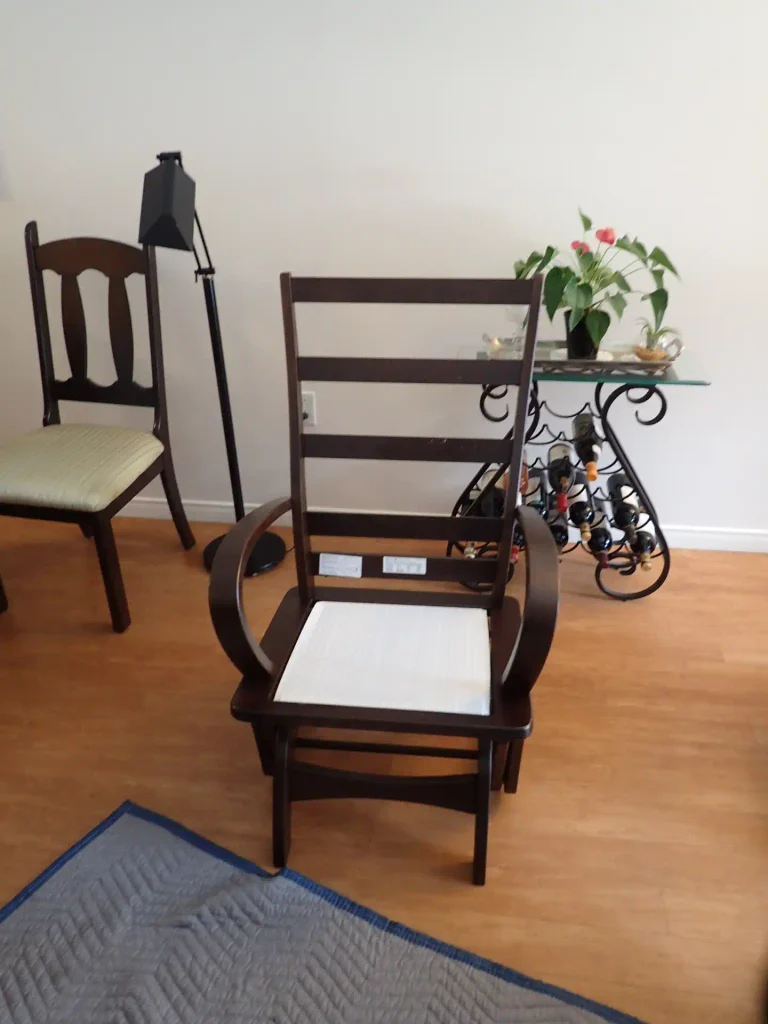
2. Structural Repairs Should Be Strong, Not Just Invisible
Appearance matters, but strength comes first when furniture has structural damage.
A repaired chair, table or frame should be stable enough for its normal intended use.
This is particularly important with:
- Chair and table joints
- Broken legs
- Sofa frames
- Cabinet doors
- Drawer structures
- Bed frames
- Recliner mechanisms
A repair that looks perfect but leaves the furniture unstable is not a quality repair.
A repair that looks perfect but leaves the furniture unstable is not a quality repair.
The repair should address the weak point
If a joint has failed, the goal should be to restore the joint rather than simply cover the visible gap.
Likewise, when part of a wooden component has broken away, the repair should restore the shape and strength of the piece as appropriately as possible.
The exact method depends on the furniture and its construction.
3. Materials Should Be Appropriate for the Furniture
Not every repair material is suitable for every piece.
Wood, veneer, laminate, leather, vinyl, fabric, foam and metal components each behave differently.
A quality repair considers factors such as:
- The original material
- The location of the damage
- Expected use
- Existing finish
- Flexibility and movement
- Colour and texture
- Long-term durability
For example, repairing a solid wood component is different from repairing a thin veneer surface.
Similarly, upholstery repair requires different considerations from repairing a wooden chair frame.
The goal is not simply to find the quickest material that fills the damaged area. The repair should be appropriate to the furniture itself.
4. The Finish Should Blend With the Original
One of the easiest ways to spot poor furniture repair is an obvious colour mismatch.
A structural repair may be technically sound, but if the repaired area has a noticeably different:
- Colour
- Sheen
- Grain appearance
- Texture
- Stain tone
the result can still look unfinished.
Quality furniture repair pays attention to the surrounding surface.
Colour matching matters
Wood furniture can have subtle variations in colour, even within the same piece.
A good finish should be selected and applied with the existing furniture in mind rather than assuming that one standard stain will match everything.
The same principle applies to painted furniture, leather and other finished surfaces.
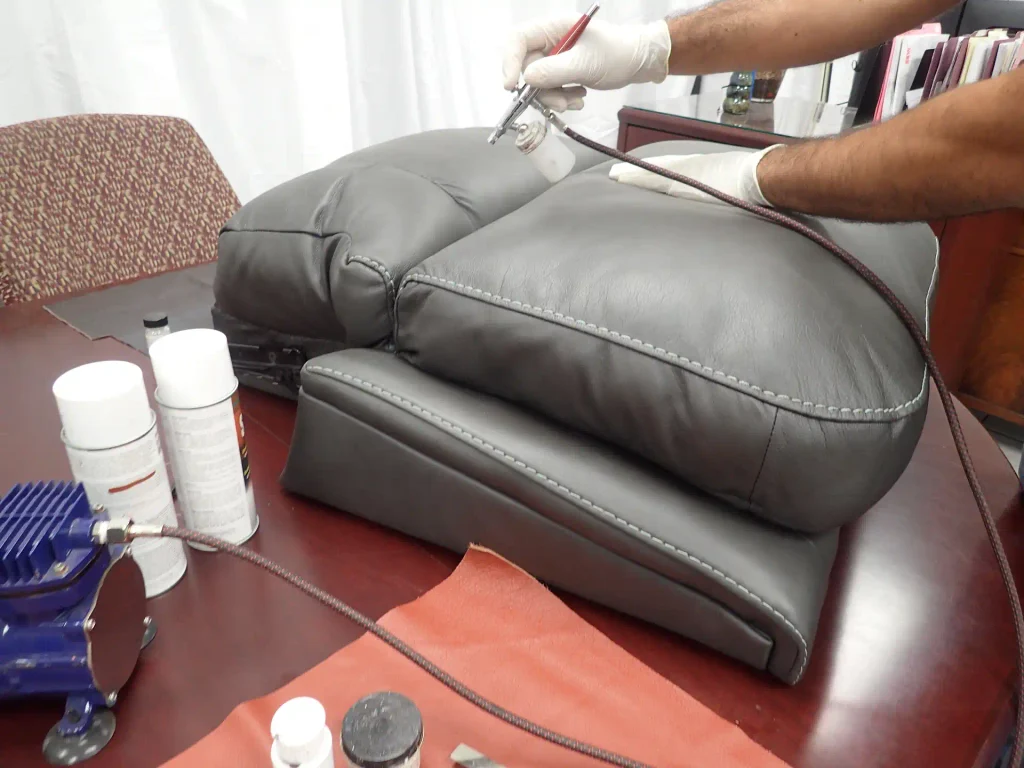
5. Upholstery Repairs Should Restore Comfort as Well as Appearance
Furniture repair is not limited to wood.
Sofas, chairs, recliners and other upholstered furniture can develop:
- Torn fabric
- Split seams
- Worn areas
- Sagging cushions
- Damaged foam
- Loose upholstery
- Leather damage
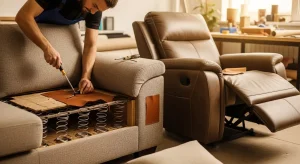
- Broken internal components
A quality upholstery repair should consider how the furniture feels as well as how it looks.
For example, simply covering a damaged section may not address a cushion that has lost its support.
Look beyond the surface
If upholstery is damaged because the underlying structure has weakened, repairing only the fabric may provide a short-term improvement without solving the real problem.
A proper assessment can determine whether the issue is limited to the upholstery or involves the cushion, frame or mechanism underneath.
6. Function Should Be Tested After the Repair
Furniture should work as intended after it has been repaired.
That means checking things such as:
- Does the chair remain stable?
- Does the drawer open and close correctly?
- Does the cabinet door align properly?
- Does the table remain level?
- Does the recliner mechanism operate correctly?
- Does the repaired upholstery remain properly secured?
A final functional check is an important part of quality control.
A repair is not finished simply because the visible damage has disappeared.
7. The Repair Should Respect the Original Furniture
Good furniture repair does not always mean making an older piece look brand new.
Sometimes the goal is to preserve its original character.
This can be particularly relevant for:
- Older solid-wood furniture
- Antique-style pieces
- Family furniture
- Custom furniture
- High-quality pieces that are difficult to replace
Over-restoring a piece can sometimes remove details that make it distinctive.
The right approach depends on what the homeowner wants: structural repair, cosmetic restoration, refinishing, preservation or a combination of these.
A good furniture repair professional should be able to discuss the desired result before work begins.
8. A Quality Repair Should Have a Clear Scope
Before approving a repair, homeowners should understand what is actually being done.
Ask:
What is damaged?
What needs to be repaired?
Will the repair be structural, cosmetic, or both?
Will the colour or finish be matched?
Will any original material need to be replaced?
Does the furniture need to go to a workshop?
What should I expect from the finished result?
Clear communication reduces misunderstandings and makes it easier to judge the final work.
Furniture Repair vs. Furniture Replacement
Many homeowners automatically think about replacing damaged furniture.
That is not always the best option.
Repair may make sense when:
- The furniture is well made.
- The damage is limited.
- The piece has sentimental value.
- The furniture is difficult to replace.
- The existing design fits your home.
- You are happy with the piece apart from the damage.
Replacement may make more sense when the underlying structure is extensively compromised or the cost and scope of restoration no longer make practical sense.
The right decision depends on the individual piece.
A professional assessment can help you understand what is realistically repairable before you spend money on a replacement.
Why Quality Matters More Than a Quick Fix
Furniture is used repeatedly.
A dining chair may support someone every day. A sofa may be used for hours at a time. A drawer may be opened hundreds of times. A table can experience constant movement, weight and everyday wear.
That is why a furniture repair should be judged by what happens after the technician leaves, not just how the furniture looks immediately afterward.
A good repair aims to restore useful life to the piece while respecting its appearance and construction.
That is the standard homeowners should look for.
Conclusion
Quality furniture repair is not about making damage disappear as quickly as possible.
It is about understanding the problem, choosing an appropriate repair method, restoring strength and function, and finishing the work so it fits naturally with the original furniture.
Before hiring a repair service, ask what is actually causing the damage, how it will be repaired and what the finished result should look and feel like.
If your furniture has a damaged frame, loose joint, scratched surface, worn finish, broken component or upholstery problem, getting a professional assessment can help you decide whether repair is the right option.